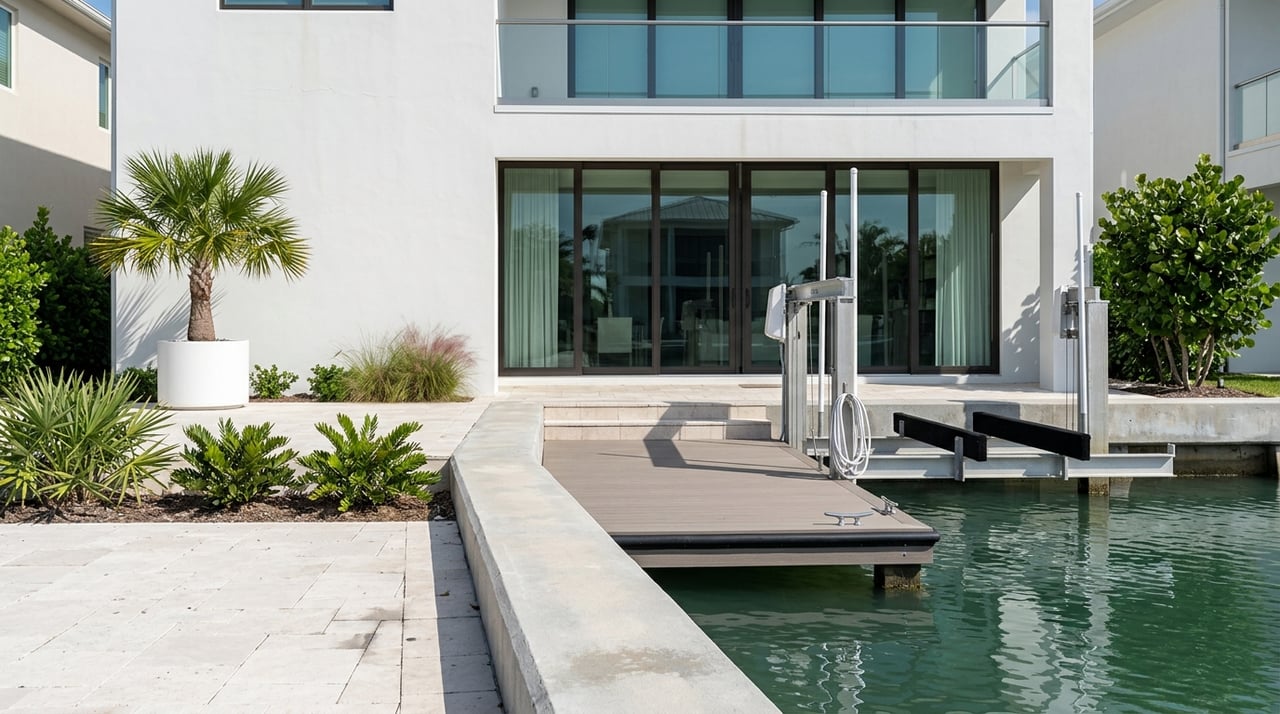
If your ideal Florida home includes easier access to the water, Ponce Inlet deserves a closer look. This coastal town offers more than scenic waterfront views. It combines marina infrastructure, public access points, and property options that can support a true boating lifestyle. Whether you are comparing a dock-capable home or a condo with marina access, understanding how boating works here can help you make a smarter move. Let’s dive in.
Why Ponce Inlet Works for Boaters
Ponce Inlet sits at the south end of a barrier island, with the Atlantic Ocean on one side and the Halifax River on the other. According to the Town of Ponce Inlet historic landmark study, the inlet itself is the key connection between inland waters and the ocean. That makes this area especially appealing if you care about getting on the water efficiently.
For many buyers, boating convenience is about much more than a waterfront address. In Ponce Inlet, the practical value often comes from proximity to the inlet mouth, the ICW and Halifax side, and access to ramps, slips, and marinas. In other words, a home that looks perfect on paper may still feel less boat-friendly if the route to open water is less direct.
Ponce Inlet also benefits from a concentrated marine network. Volusia County’s 2024 clean marina and boatyard list includes Lighthouse Boatyard & Marina, Inlet Harbor Marina, and Harbour Village Marina in Ponce Inlet. That kind of clustering is important when you want multiple dockage and service options nearby.
Boat-Friendly Property Types
Riverfront homes with dock potential
If you want private waterfront access, single-family homes and other fee-simple waterfront properties may offer the most direct path. In these cases, Volusia County property records can help you screen for boating-related improvements before you dig deeper.
The Volusia County Property Appraiser uses improvement codes such as BL1 for boat lift, BSL for boat slip, DOC for boat dock, SBD for ship and boat dock, and SEW for sea wall. These codes are not a substitute for full due diligence, but they can be a useful first step when you are narrowing your search to homes with boating utility.
For buyers who want control over their own dock setup, this can be an efficient way to separate true marine-oriented properties from homes that are simply near the water. It is also helpful when comparing homes that may differ in lift capacity, shoreline improvements, or docking configuration.
Condos with marina access
Ponce Inlet also offers a condo path to boat-friendly living. This can be especially attractive if you want lower exterior maintenance while still staying connected to the water.
One strong example is Harbour Village Marina Club, which states that it has 142 privately owned slips, six guest slips, four slip sizes, and resident-only eligibility for slip ownership or leasing. The marina also notes that it is only minutes from the inlet and Atlantic Ocean. For many buyers, that setup captures the appeal of condo living without giving up boating access.
The county’s Halifax and Indian River boating map for Zone 5 identifies several condo and marina communities in the Ponce Inlet and nearby ICW corridor, including Harbour Village Golf & Yacht Club, Inlet Marina Condo-Minorca, Ocean Inlet Yacht Club, Venetian Villas Condo, Waterway East Condo, and Waterway West Condo. This supports a broader pattern in the area: condo living and slip access are often closely connected.
Marina and dry-storage options
Not every boat owner needs a private dock behind the home. Some buyers prefer the flexibility of marina-based storage, especially if they want services and amenities in one place.
Inlet Harbor Marina is a notable local option. Its official marina page states that it offers wet and dry slips, concrete floating docks, vertical lifts up to 27,000 pounds, dry storage slips up to 25,000 pounds, fuel, pump-out, electric service, and an on-site waterfront restaurant. It also says the marina is 1 mile north of Ponce Inlet on the north cut.
For some owners, that kind of setup can be a practical alternative to maintaining private waterfront improvements. It may also suit second-home buyers who want boating access with fewer day-to-day property responsibilities.
Public Access Adds Flexibility
Even if you are not buying with a private slip on day one, public access still matters. It can expand how you use the area while you evaluate long-term options.
The town notes that Kay & Ayres Davies Lighthouse Park has a public boat ramp across the street with limited trailer parking. The same resource highlights Lighthouse Point Park for inlet shoreline access and a jetty area used for fishing and waterfront recreation.
These public assets do not replace private dockage, but they do add convenience and flexibility. For buyers new to the area, they also help illustrate how boating and waterfront recreation are built into everyday life in Ponce Inlet.
What to Verify Before You Buy
Understand how the slip is treated
One of the most important questions in a boat-oriented purchase is simple: what exactly are you buying? In a condo setting, a slip may be deeded, assigned, leased, or treated differently under the governing documents.
Under Florida condominium law, limited common elements are common elements reserved for the use of one or more specific units, as stated in the declaration. That matters because a boat slip may not always transfer in the way a buyer expects. The details should come from the recorded documents, not assumptions or marketing language.
Review association records carefully
If you are considering a condo or marina-linked community, official association records can answer many of the practical questions that shape ownership. The Florida Division of Condominiums FAQ page explains that official records can include the declaration, bylaws, amendments, current rules, meeting minutes, insurance policies, contracts, accounting records, reserve studies, and other operational documents.
These records can help clarify issues such as:
- Whether the slip transfers with the unit
- Whether there are resident-only restrictions
- Whether guest slips are available
- Whether there are waiting lists
- Whether marina fees apply in addition to condo assessments
- Whether there are size, draft, power, or use limits
For a boating buyer, these are not small details. They shape how convenient ownership will actually feel after closing.
Search public records
The Volusia County Clerk’s official records system is another important part of due diligence. The Clerk states that deeds, mortgages, easements, liens, and plats can be researched through its public records, with online access reaching back to April 4, 1988, and historical records available to 1887.
That can be especially helpful if you are trying to confirm how a waterfront feature or slip has been documented over time. Buyers should also know that the Clerk notes staff do not perform title or lien searches for the public, so this tool is best used as part of a larger review process.
Consider town-specific records
Ponce Inlet has an additional local angle worth noting. The town’s code of ordinances defines a boat slip registry as the town’s official record of all existing and available undeveloped boat slips.
For buyers focused on boating, that is a useful reminder that local records can matter just as much as county or association documents. A well-informed purchase often comes down to checking several layers of information instead of relying on a listing summary alone.
New-construction condo buyers should review disclosures
If you are looking at a newer condominium purchase, document review becomes even more important. Under Florida Statute 718.503, developers must provide certain disclosure documents, and buyers may terminate within 15 days after receiving all required documents.
That does not replace legal or professional guidance, but it does reinforce an important point: when boating access is part of the appeal, the paper trail deserves careful attention before you move forward.
Think in Minutes to Open Water
For boaters, one of the best ways to evaluate a property is to think beyond the street address. A more useful question is how long it takes to get from your slip or dock to open water.
Harbour Village Marina Club says its sheltered ICW entrance places boaters only minutes from the inlet and Atlantic Ocean. Inlet Harbor Marina says it is 1 mile north of Ponce Inlet on the north cut. Descriptions like these show why marina-adjacent and ICW-side locations often stand out for boating convenience.
Still, route time is not just about distance. Volusia County’s manatee protection and boating restriction maps show slow-speed and restricted areas in parts of the Halifax and ICW system and around Ponce Cut. A route that appears short on a map may take longer on the water because of those conditions.
A practical way to compare options is to look at three factors together:
- Where the dock or slip sits relative to the ICW
- Whether the route passes through a marina basin or no-wake area
- Whether the slip is private, shared, leased, or guest-only
That approach usually gives you a clearer picture of real boating convenience than a property description alone.
How to Choose the Right Fit
The best boat-friendly property in Ponce Inlet depends on how you plan to use it. If you want direct control and private dockage, a riverfront home may offer the most flexibility. If you prefer a lower-maintenance lifestyle, a condo community with marina access may deliver the right balance.
If you only need storage and launch support, a marina-based solution may be the most efficient option of all. The key is to match the property type to your boating habits, not just your wish list.
In a market like Ponce Inlet, that kind of fit matters. A property can be close to the water and still function very differently depending on its records, rules, and route to the inlet.
When you want a clear, discreet view of boat-friendly opportunities in Ponce Inlet, working with a local team that understands coastal condos, waterfront living, and detail-heavy transactions can save time and reduce uncertainty. To explore current options with a concierge-level approach, connect with The Cook Group Luxury Real Estate.
FAQs
What makes Ponce Inlet a good location for boating?
- Ponce Inlet connects inland waters and the Atlantic Ocean, and the area offers a concentrated mix of marinas, ramps, and ICW access that supports a boating lifestyle.
What property types in Ponce Inlet may suit boat owners?
- Buyers often consider riverfront homes with dock potential, condo communities with marina access, and marina-based wet or dry storage options depending on their needs.
What should buyers verify about a condo boat slip in Ponce Inlet?
- Buyers should confirm whether the slip is deeded, assigned, leased, or treated as a limited common element, and whether it transfers with the unit.
Where can buyers research waterfront and slip-related records in Volusia County?
- Useful sources include the Volusia County Property Appraiser, the Volusia County Clerk’s official records, condominium association records, and the Town of Ponce Inlet’s code and boat slip registry references.
How should buyers compare boating convenience between Ponce Inlet properties?
- A helpful method is to compare minutes to open water, route restrictions, proximity to the ICW, and whether the slip or dock access is private or shared.